
MODI
TM
Powerful Measurements from Microscopy to Spectroscopy
MODI system advantage
Powerful Measurements from
Microscopy to Spectroscopy
The MODI instrument offers unprecedented value with smart automation, sophisticated features, easy use, modularity, and a significant cost reduction to anything remotely comparable. Our philosophy is to buy what you need with the option to upgrade with new accessories and software at any point.
Download a detailed informational brochure below for more in depth descriptions of MODI’s features and capabilities.
Research and
Education
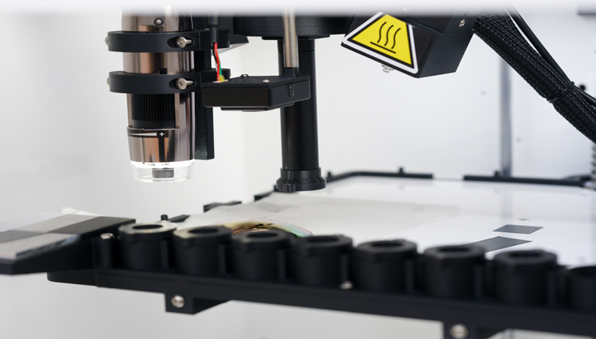
Our integrated instrumentation platform MODI brings together numerous imaging tools in a single, accessible and configurable system suited for multidisciplinary research and education.
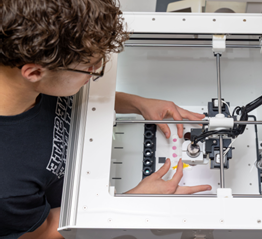
MODI delivers a modern, industry-aligned learning experience, scaling from classroom demonstrations to advanced undergraduate research to industry teaching sessions.
Manufacturing
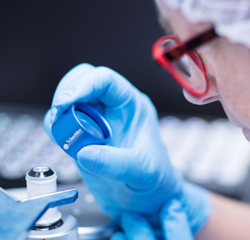
Whether it be precision optics or machine shops, manufacturers need traceability, objective metrics, and measurement-backed quality control. The MODI instrumentation provides a dynamic toolset with powerful inspection software and automation. Additionally, MODI offers flexibility to adapt quickly to new parts, specs, and customer demands.
Remote Sensing
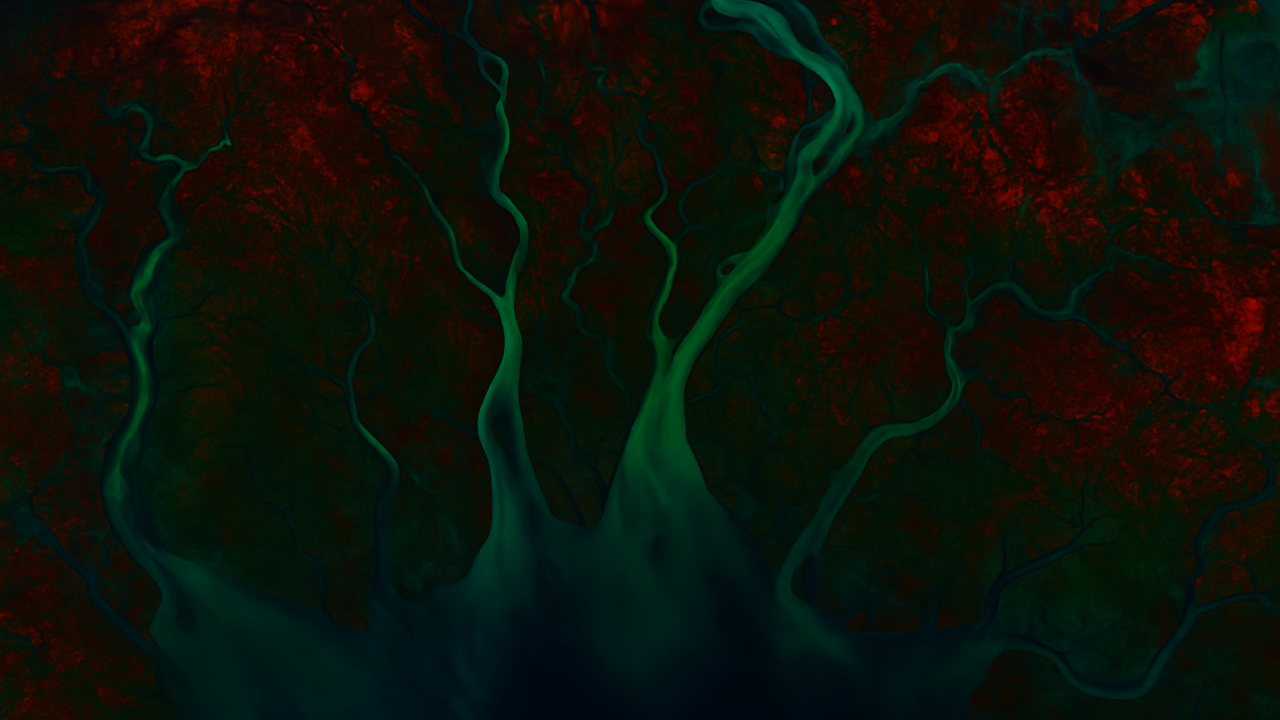
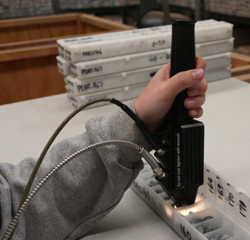
Remote sensing field experiments — from field research to aerospace & defense — start and end in the lab. MODI brings sophistication to spectrometers in the lab, turning point measurements into hyperspectral imaging.
We provide plug and play automation with many existing spectrometer brands. Easy connect for lab measurements, and disconnect for field use.
-
![]()
Research Automation
Our integrated instrumentation platform, MODI, brings together multiple imaging modalities into a single, configurable system designed for automated and multidisciplinary research workflows. MODI enables streamlined data acquisition, repeatable experimental setups, and scalable imaging pipelines that accelerate discovery across scientific and industrial applications.
-
![]()
Technology Education
MODI transforms imaging education by bringing real-world instrumentation into the classroom and lab. Designed to scale from introductory demonstrations to advanced undergraduate research and professional training, our system delivers hands-on experience with the same tools and workflows used in industry.
MODI helps learners build practical skills in imaging, data analysis, and experimental thinking—bridging education and application.
We are actively developing support for structured coursework and labs.
-
![]()
Manufacturing
Whether it be precision optics or machine shops, manufacturers need traceability, objective metrics, and measurement-backed quality control. The MODI instrumentation provides a dynamic toolset with powerful inspection software and automation. Additionally, MODI offers flexibility to adapt quickly to new parts, specs, and customer demands.
Read more about our industry standard optic measurements with the button below.
OPTIC MEASUREMENTS STANDARDS
-
![]()
Remote Sensing
Remote sensing field experiments — from field research to aerospace & defense — start and end in the lab. MODI brings sophistication to spectrometers in the lab, turning point measurements into hyperspectral imaging.
We provide plug and play automation with many existing spectrometer brands. Easy connect for lab measurements, and disconnect for field use.
-
![]()
Bioengineering
Automated microscopy combined with macroscopic hyperspectral imaging enables powerful, high-throughput analysis for bioengineering applications. MODI supports detailed morphological and chemical characterization of cells, tissues, and biomaterials. Automated workflows improve repeatability, scalability, and data richness for both research and translational use.

Product Features
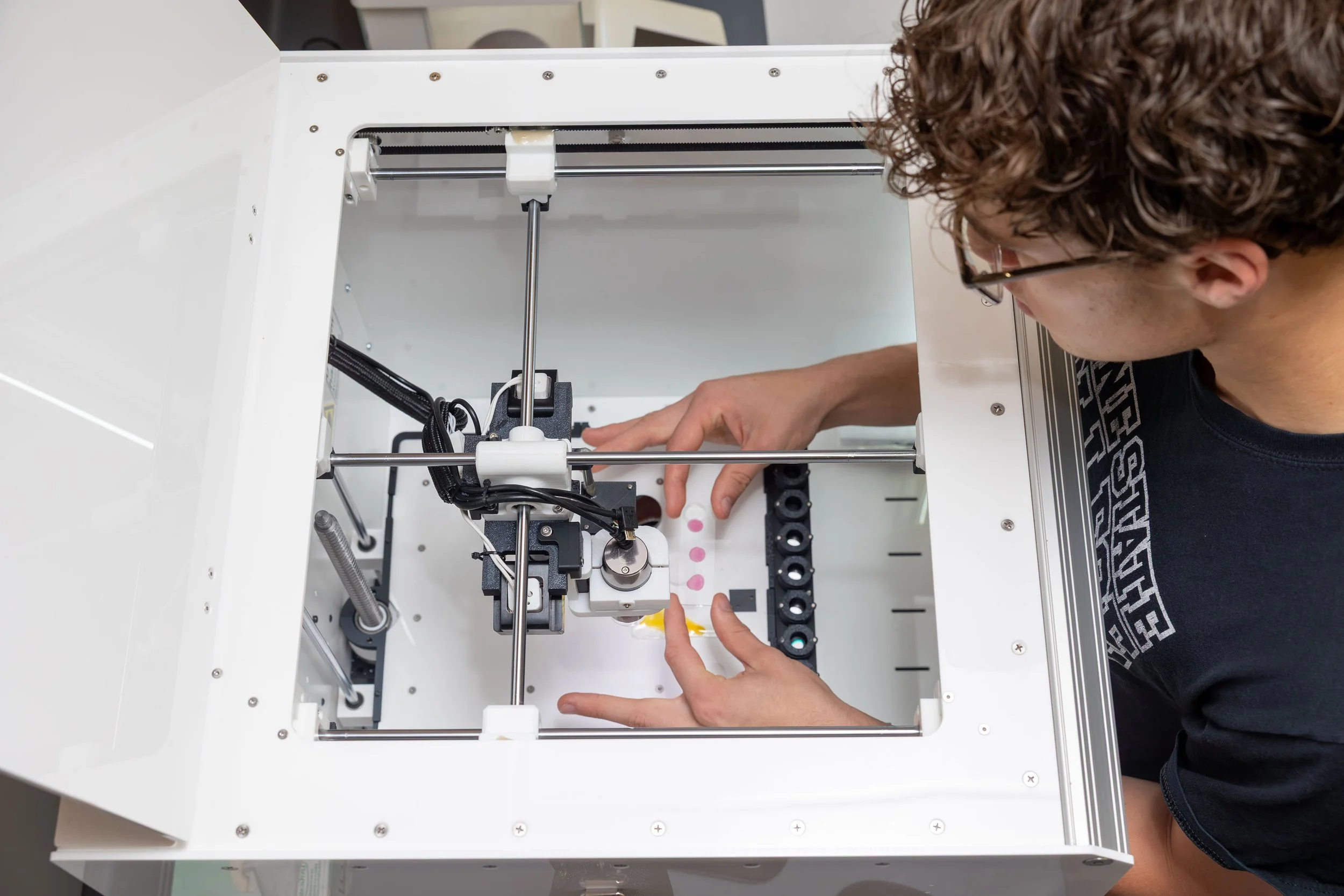
The MODI system provides sophistication in hardware, accessories, routines, and software to enable autonomous operation. Our users have access to years of developed features and innovation.
MODI is designed to be modular and adaptable, whether you are performing rigorous research, saving time in production, or focused on education and learning.
For more technical detail download our MODI system product brochure.
-
Item description
-
The standard MODI system comes with a variety of integrated lighting types (#1) and controls including ring lights, quandrant ring selection, coaxial lighting, darkfield illumination, fluorescence illumination, backlight sources, and scatter light mode. MODI has scan procedures that auto-detect glare and gradients, adjusting lighting to eliminate any bad data.
-
MODI scanning has a critical modality called “focus stacking” that allows a series of hundreds of photos to be taken at different depths, combining all images into a high quality fully focused image. This is particularly important for samples with heavy topology changes. Single depth results (#4) and focus stacked results (#5) are showcased below.
-
Along with focus stacking procedures, you can generate depth maps accurate to the Depth of Field (DoF) of the onboard digital microscope. Our Standard configuration microscope has a depth of 0.1mm, allowing depth maps of 100um in accuracy to be generated (#6).
-
Automatic scan routines with our digital microscope are used to raster across a sample and autofocus for each image. The result is built into a mosaic “superimage” (#1 & #2) that stitches images across the part into one large image, providing high resolution large field pictures.
-
Our suite of analysis software tools can be used to detect defects and measure features based on customizable morpholgy and spectral filters (#3 & #4). This can be used for example to detect and distinguish Foreign Object Debris (FOD), surface abrasion, scratches, and contamination.
-
Our Standard configuration includes a Multispectral Module (#1) sensitive to infrared wavelengths. This point sensor is paired with low-noise, high-speed electronics to deliver high quality data. The point is magnified with optics (#2) to provide spatially resolved measurements. Combined with our motion gantry and autofocus, an image is rastered across a sample. This principle applies to the Spectroscopy Plus configuration, using point spectrometers and generate hyperspectral imagery.
-
The Optical Modifier Tool Exchange uses magnetic coupling to pick up and remove different filters, lenses, diffusers, and other optical modifiers from the filter bay (#3). With bandpass filters, the spectral module can be used for quantitative applications that require discrete multispectral sensing.
-
To maintain high quality and consistent results, MODI includes onboard calibration targets that provide known reflectance & emissivity. Calibration is automatically measured and maintained to compensate for any dark current drift, thermal drift, and changes in sensitivity.
Use Cases
Lorem ipsum dolor sit amet, consectetur adipiscing elit, sed do eiusmod tempor incididunt ut labore et dolore magna aliqua. Ut enim ad minim veniam, quis nostrud exercitation ullamco laboris nisi ut aliquip ex ea commodo consequat.
-
The MODI system is capable of spectrally fingerprinting and distinguishing between various class of materials, including different blends and composition ratios. Example #1 shows a coarse resolution scan of various plastics including PET, PUR, HDPE, LDPE, PVC, ABS, & PLA. Example #2 shows a variety of textile blends with differing ratios of Cotton, Polyester, and Elastane
-
Infrared Wavelengths, particularly bands around 1225nm and 1425nm, exhibit O-H absorption. Water content can be measured and imaged across a sample (#3). GeoPulse has validated leaf water content against traditional mass dehydration methods with a correlation ≥ 90%.
-
Thin film interference patterns measured with a spectrometer are often used to measure coating layer thickness to within nanometers of precision, and track variations. Example #4 shows a transmission spectra measured with MODI of a sample with thin film interference.
-
Leveraging the combined capability of microscopy and spectroscopy allows users to distinguish & classify minerals. The system has also been used to study adultery, sythetic versus natural varieties, and sample quality grading.
-
Both preserved and live specimens have been measured with the MODI device. One of the first…
-
Automatic scan routines with our digital microscope are used to raster across a sample and autofocus for each image. The result is built into a mosaic “superimage” (#1 & #2) that stitches images across the part into one large image, providing high resolution large field pictures.
-
Leveraging the combined capability of microscopy and spectroscopy allows users to distinguish & classify minerals. The system has also been used to study adultery, sythetic versus natural varieties, and sample quality grading.
-
Leveraging the combined capability of microscopy and spectroscopy allows users to distinguish & classify minerals. The system has also been used to study adultery, sythetic versus natural varieties, and sample quality grading.